Cognitive Behavioural Therapy in Whitley Bay and Online
James Blacklock
Social Anxiety
You rehearse conversations, leave early, and say no to things you'd actually like to do.

What is social anxiety?
Social anxiety is a strong, lasting fear of being judged, embarrassed or showing yourself up in front of other people. It's much more than shyness. It can affect work, friendships, relationships and the opportunities you go for.
Many people with social anxiety don't think of it as anxiety at all. They just think they're "not confident" or "not good with people". The good news is that it's one of the most treatable anxiety problems there is.
What you might notice
Sound familiar?
Dreading meetings, presentations, phone calls or social events
Drinking more than you'd like to get through social situations
Rehearsing what to say beforehand, and replaying it for hours afterwards
Staying quiet, avoiding eye contact, or keeping close to someone you know
Worrying that people will notice you blushing, shaking or sweating
Turning down invitations, interviews or dates
What keeps it going
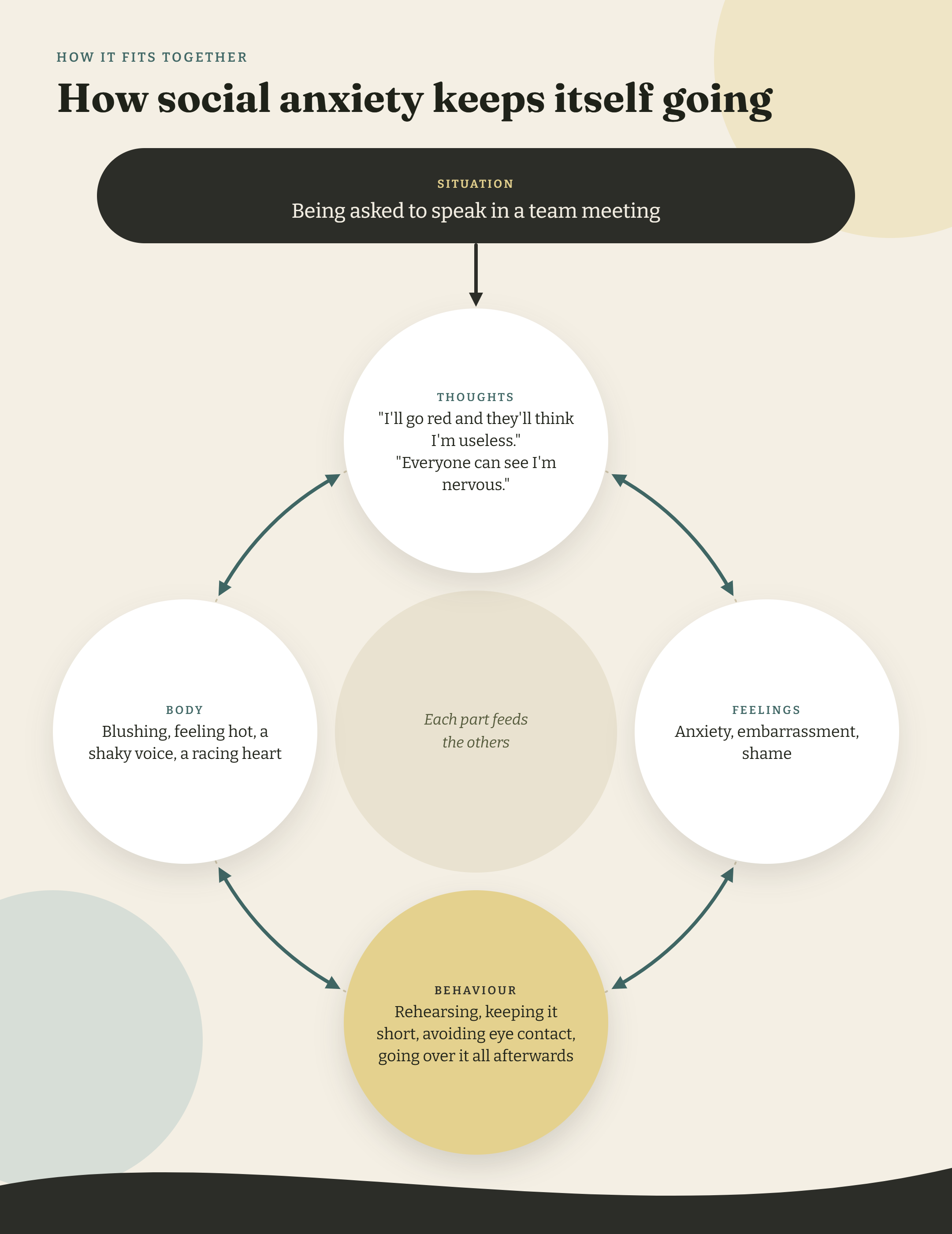
In social situations, social anxiety turns your attention inwards. Instead of focusing on the conversation, you're monitoring how you look and sound, and that inner picture is usually far harsher than what others see.
To cope, you use "safety behaviours", like rehearsing, hiding your hands or avoiding eye contact. They feel protective, but they can make you seem more distant, and they stop you discovering that things would have gone fine anyway. Then, afterwards, the post-mortem begins.
How therapy helps
NICE recommends a specific form of CBT developed for social anxiety. I use the cognitive model developed by Professor David Clark and Professor Adrian Wells, one of the most researched treatments for social anxiety.
Together we'll map out what happens for you, then test it in practice. That includes experiments that show how safety behaviours and self-focus affect you, feedback on how you actually come across, and gradually dropping the habits that keep anxiety going. It's active and practical, and it works.
What working with me looks like
Treatment usually takes around 12 to 14 sessions. Sessions can be in person in Whitley Bay or online, and some sessions may include practising in real situations.
Questions people often ask
Isn't this just who I am?
Social anxiety can feel like a personality trait, especially if it's been there since childhood. But it's a pattern, and patterns can change.
Will I have to do things that scare me?
Yes, gradually and with support. Every step is agreed together, and you're always in control of the pace.
I find it hard to talk to people. How will therapy work?
That's exactly why I'll do most of the talking at first. Many people with social anxiety find one-to-one sessions much easier than they expected.