Trauma-Focused Therapy in Whitley Bay and Online | CBT and EMDR
James Blacklock
Post Traumatic
Stress Disorder
(PTSD)
It was years ago. But your body still reacts like it's happening now.

What is Post Traumatic Stress Disorder
Post-traumatic stress disorder (PTSD) can develop after going through, or witnessing, something frightening or overwhelming. That might be an accident, an assault, a medical emergency, or something that happened at work.
With PTSD, the memory doesn't settle into the past the way most memories do. Instead, it keeps intruding into the present, and part of you stays on guard, as if the danger hasn't passed.
Some people experience complex PTSD (C-PTSD) after long-lasting or repeated trauma. As well as the symptoms of PTSD, it can affect how you manage emotions, how you see yourself, and your relationships.
What you might notice
Sound familiar? PTSD is common, and follows similar patterns for many people
Memories, flashbacks or nightmares that feel like reliving it
Feeling cut off, numb, guilty, ashamed or angry
Feeling jumpy, on edge or constantly on guard
Pushing thoughts of it away, or struggling to remember parts of it
Avoiding places, people or reminders of what happened
Sleep problems and difficulty concentrating
What keeps it going
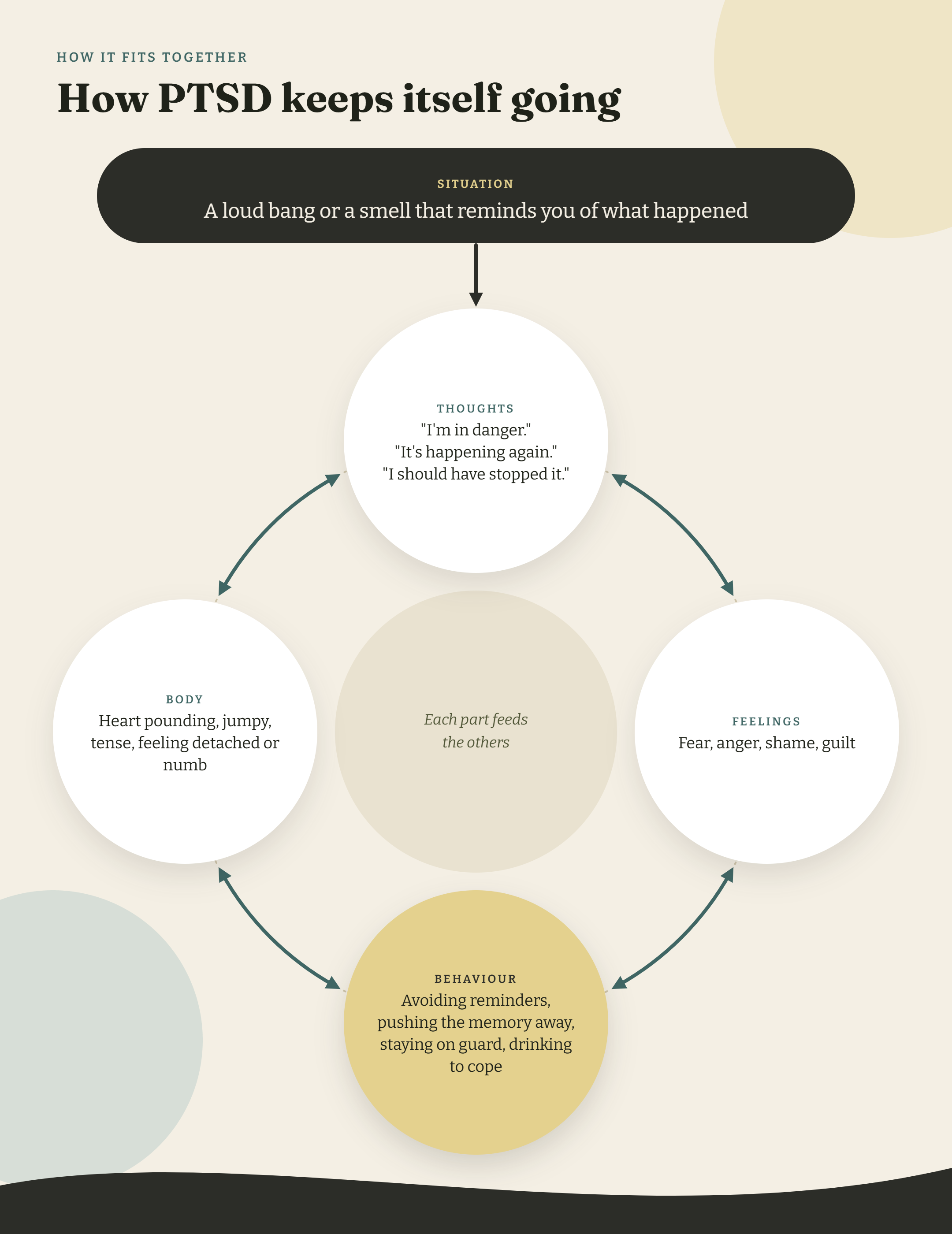
Trauma memories are often stored in a jumbled, unprocessed way. So when something reminds you of what happened, such as a sound, a smell, or a place, the memory can fire up as if it's happening now. It hasn't been filed away as something that's over.
The way you make sense of what happened matters too. Thoughts like "it was my fault" or "the world isn't safe" can keep you feeling under threat. Pushing memories away and avoiding reminders is completely understandable, but it stops the memory from being processed, so it stays raw.

How therapy helps
NICE recommends two main therapies for PTSD: trauma-focused CBT and EMDR. I offer both.
Trauma-focused CBT: I use cognitive therapy for PTSD, developed by Professor Anke Ehlers and Professor David Clark. It helps update the memory with what you know now, change painful beliefs about what happened, and reclaim the parts of life you've been avoiding.
EMDR: EMDR uses bilateral stimulation, such as eye movements, while you briefly bring the memory to mind. This helps the brain process it, so it feels more like a memory and less like it's happening now.
You won't be rushed into talking about anything before you're ready. We'll start by making sure you feel safe and steady, and decide together which approach suits you best.
What working with me looks like
Treatment for a single traumatic event often takes around 8 to 12 sessions. Longer or more complex trauma usually needs more. Sessions can be in person in Whitley Bay or online.
Questions people often ask
Will I have to talk about everything that happened?
Not all at once, and not before you're ready. We'll go at a pace that feels manageable, and you're always in control.
It happened a long time ago. Is it too late?
No. Therapy can help with trauma from many years ago, as well as more recent events.
Should I choose CBT or EMDR?
You don't need to decide in advance. We'll talk it through in your first session and pick what fits you best.